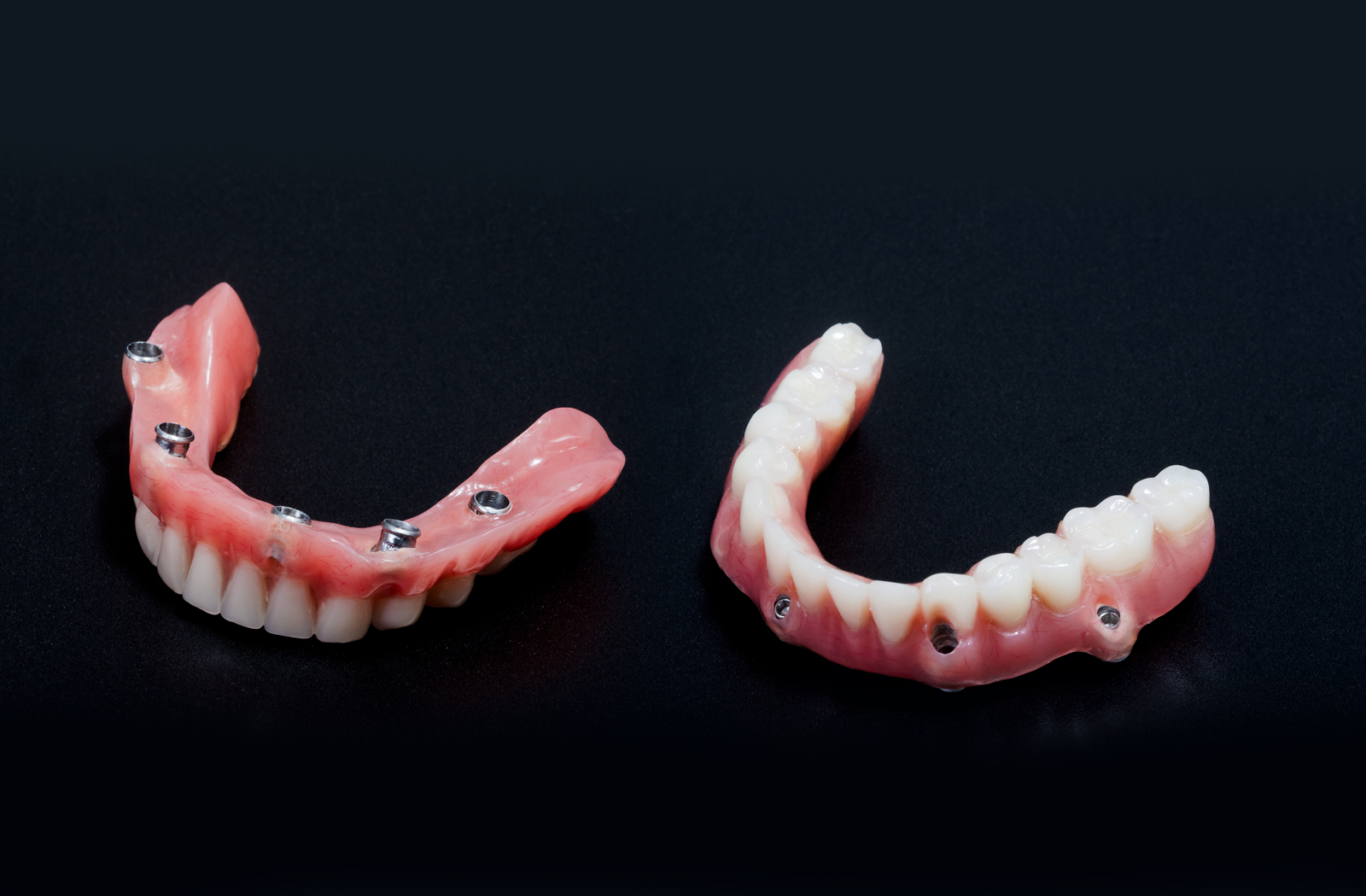
You will discover the long-term durability of each choice, how they impact the health of your jawbone. Before being completely replaced, fixed hybrid prostheses often have a longer lifespan. According to studies, prosthesis survival frequently surpasses 95% when maintained, while implant survival rates for IFRs are close to 98% after five years. With fixed bridges, you should anticipate repairs like as loose screws or fractured teeth more frequently than complete implant failure. Implant overdentures also exhibit high implant survival, frequently exceeding 90% after five years; however, the overdenture's acrylic teeth and attachments deteriorate more quickly. Every two to five years, you'll probably require new attachments, occasional relines, or rebasing. Although maintenance costs are smaller every visit at our GTA dentistry, they accumulate over time. Both choices rely on your level of hygiene, whether you smoke, and any health issues you may have, including diabetes. Regular dental checkups and everyday maintenance increase longevity and reduce the chance of complications.
Fixed hybrids better uniformly distribute chewing forces into the bone and firmly adhere to implants. Over time, this mechanical pressure promotes greater jawbone density by slowing bone resorption. You can help maintain the height and breadth of your bones if you eat a diverse diet and take care of your implants. Less direct force can be applied to bone via overdentures that employ robust attachments or connect to fewer implants. More ridge remodeling may result from that, particularly in the maxilla. Nevertheless, well-designed maxillary overdentures with four implants continue to retain bone more effectively than traditional dentures.
Our dentist at Dentistry on Dufferin will determine the baseline bone volume and suggest the alternative that provides the jawbone with a steady, consistent load if bone preservation is the most important factor.